
















OUR BUSINESS CASES
Optimising service offerings to improve client satisfaction and profitability
A group of holiday villages chose Veltys to better manage the performance of its activities, with a dual objective: to improve the client experience and increase profitability.


Context
In a holiday village, the activities on offer are not just entertainment: they shape guests' memories, influence their level of satisfaction and contribute directly to revenue. But behind these convivial moments lie complex challenges: decentralised management systems, fragmented data, diverse clienteles depending on the country, and marked seasonality that complicates forecasting. For this group, having a clear and reliable view of the performance of its activities had become essential in order to adapt its offering and negotiate effectively with its partners.

Method
Veltys mobilised its modelling experts to shed light on these issues. The team built an econometric model capable of integrating the spatial configuration of villages, the impact of distance on activities, the effects of vehicle rental, as well as weather conditions, holidays and public holidays. The analysis focused on capacity, congestion and seasonality of activities, while measuring the effect of discount vouchers on consumption and substitution with actual expenditure. Finally, automated reports were deployed, allowing each village to track its own performance.

Results
Thanks to this approach, the group was able to identify its flagship activities, pinpoint those that were poorly scaled, and accurately quantify the effect of discount vouchers. The teams now have a more comprehensive view of client behaviour, with clear indicators that can be compared from one village to another. By combining economic management with a detailed understanding of the client experience, Veltys has paved the way for sustainable optimisation of the offering, reconciling holidaymaker satisfaction with site profitability.
Automatically structuring a technical database using AI and image recognition
A major leisure company wants to automate the collection and structuring of technical information about its products in order to optimise its business and develop new offerings.

Context
The client receives technical information from more than 50 suppliers in the form of image documents or scans, covering more than 500 products and around 20 characteristics per product. The lack of consistency between formats makes this information unusable for optimisation projects. The systematic and continuous collection of this data is crucial for developing new uses, improving operational performance and supporting decision-making. The client wanted to implement an automated, proprietary methodology capable of integrating new product information and gradually extending the scope to less priority features.
Method
We have developed an image recognition algorithm to automatically extract technical information from documents sent by suppliers. The approach was designed to consistently process heterogeneous formats and automate the continuous integration of new data. The proprietary algorithm ensures data confidentiality.
Results
The algorithm now automatically collects and structures technical information for all these products, making the data immediately usable for analysis and optimisation projects. The client has a structured, scalable database that facilitates the development of new BUSINESS CASES and continuous improvement in operational performance.
Optimising a hotel group's range of activities to combine satisfaction and revenue
Context
A group of holiday villages wanted to manage the performance of its activities more closely in order to identify areas for optimisation and improve both client experience and profitability. Activities are a key factor in satisfaction and revenue, but their monitoring remained limited by decentralised management systems and fragmented data. The diversity of clientele across different countries, as well as high seasonality in visitor numbers, required a precise approach to adjust the offering, better control costs and prepare for negotiations with partners.
Method
The team modelled activity performance using econometric analysis incorporating multiple dimensions. Village layouts were automatically processed to measure the impact of distance on activity consumption, while vehicle rental, weather conditions, holidays and public holidays were included as explanatory variables. The analysis also took into account infrastructure capacity and congestion, as well as the effect of discount vouchers distributed to clients. Finally, automated reports were created for each holiday village, providing a consistent overview that could be used by local teams.
Results
The study provided a better understanding of client behaviour in relation to the activities on offer. It revealed flagship activities that generated high satisfaction and activities that were poorly tailored to demand. The impact of discount vouchers was assessed, both in terms of the likelihood of consumption and substitution with actual expenditure. The model thus provided a solid basis for readjusting the offering and monitoring the evolution of performance indicators, while giving managers automated tools to manage their villages with greater precision.
Evaluation of national marketing campaigns and their local performance for leisure establishments
A gambling operator wanted to refine the measurement of the impact of its marketing operations, not only at the national level but also on an establishment-by-establishment basis. The aim was to anticipate the performance of future campaigns and, ultimately, to optimise their planning.
Until then, the model in place only allowed the impact of marketing operations to be estimated at national level, without taking local differences into account. The operator's ambition was therefore to build a system capable of accurately assessing the performance of each operation at a sub-national level and to use these analyses to guide its future choices.
Context
A gambling operator wanted to refine the measurement of the impact of its marketing operations, not only at the national level but also on an establishment-by-establishment basis. The aim was to anticipate the performance of future campaigns and, ultimately, to optimise their planning.
Until then, the model in place only allowed the impact of marketing operations to be estimated at national level, without taking local differences into account. The operator's ambition was therefore to build a system capable of accurately assessing the performance of each operation at a sub-national level and to use these analyses to guide its future choices.
Method
Veltys collected, enriched and consolidated historical data on establishments, their performance and marketing operations, creating five unique, granular databases containing more than 30 different variables. An assessment provided a comprehensive overview of past performance and its determining factors. Establishments were segmented according to their seasonality and specific characteristics. More than 200 econometric models were developed to assess the impact of different categories of marketing operations on 8 key performance indicators, while neutralising the effects of the establishments' specific characteristics and external factors. The results were organised into a detailed analysis file and an industrialised tool that makes it easy to update estimates.
Results
The assessment identified marketing operations that had a significant impact on performance and those whose effect was more limited. It highlighted differences between types of establishments and their performance profiles, providing the client with insights to adapt its marketing strategy. The industrialised tool delivered facilitates the updating of analyses and enables the prediction and optimisation of future marketing actions.
Discover our other business case studies







Leave us a message
Have a question or comment?
Feel free to contact us any way you like.
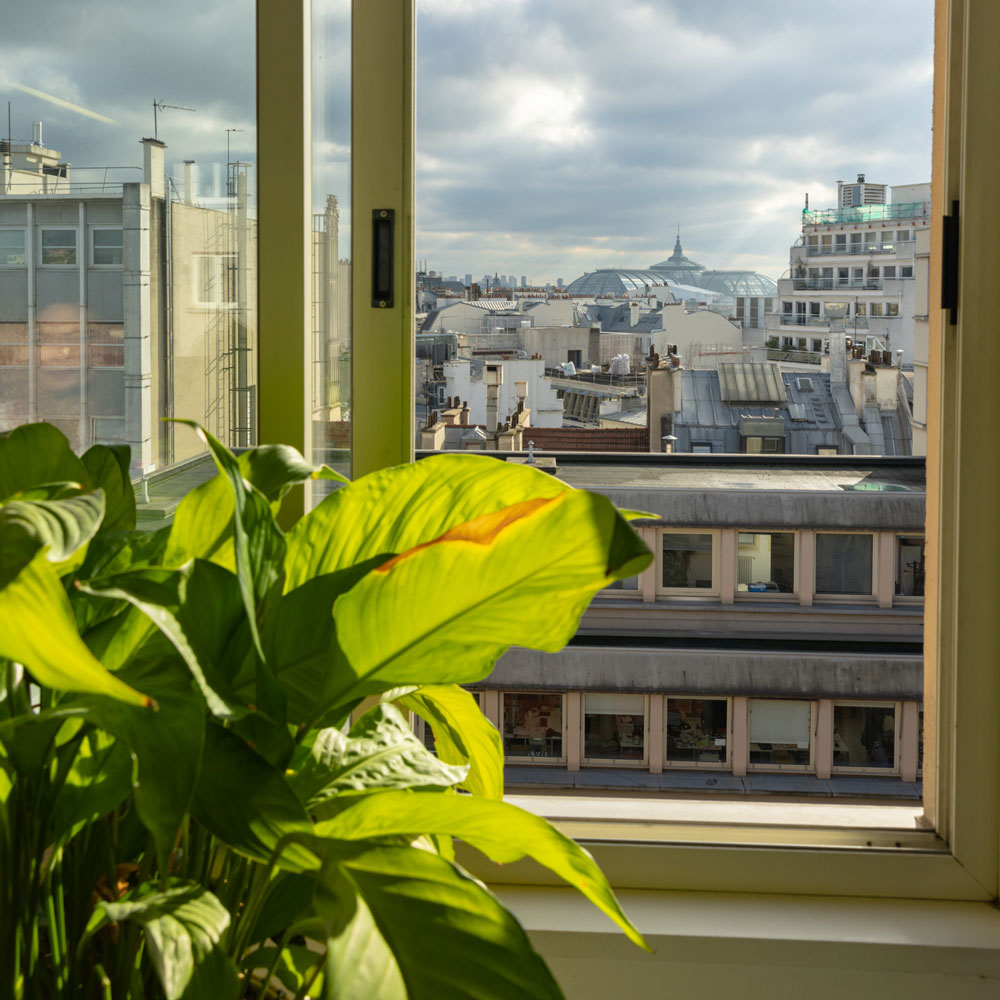


The offices
32 rue de Ponthieu
75008 Paris
Métro : Franklin Roosvelt
 Saint Philippe du Roule
Station Vélib’ :
8050 Boétie – Ponthieu
8039 Colisée – Champs-Elysées